A greenhouse base in Ireland is only as strong as the base it sits on. In Ireland, where we regularly deal with strong winds, heavy rain, and softer ground in winter, building a sturdy, level greenhouse base is essential. A good base helps your greenhouse stay square, keeps doors aligned, improves drainage, and reduces movement over time.
In this guide, we’ll explain how to prepare level ground properly, how anchoring with rebars can improve stability, and we’ll compare the three main base options—ground base, concrete base (cement flooring), and timber base—with pros and cons so you can choose what fits your budget and time.
1. Why Your Greenhouse Base in Ireland Matters
A proper base helps to:
- Keep the greenhouse base in Ireland level and square (so doors open and close smoothly)
- Improve stability in windy conditions
- Reduce frame stress that can happen when a greenhouse settles unevenly
- Support better drainage and reduce water pooling around the greenhouse
- Extend the overall lifespan of the greenhouse structure
If the base is uneven, you may notice:
- Stiff or misaligned doors
- Gaps at the bottom of panels
- Frame twist over time
- More condensation and damp around the base area
2. Start With the Right Spot in the Garden
Before you build anything, pick a location that offers:
- Good sunlight (avoid constant shade)
- Shelter from wind if possible (hedges/fences can help)
- Enough space around the greenhouse for access and maintenance
- Good drainage (avoid low-lying areas that get waterlogged)
Irish garden tip: If your ground stays wet in winter, consider adding extra drainage and a compacted sub-base before assembly.
3. The Number One Rule: A Level greenhouse Base in Ireland
No matter which base type you choose, the most important thing is level ground.
How to level correctly
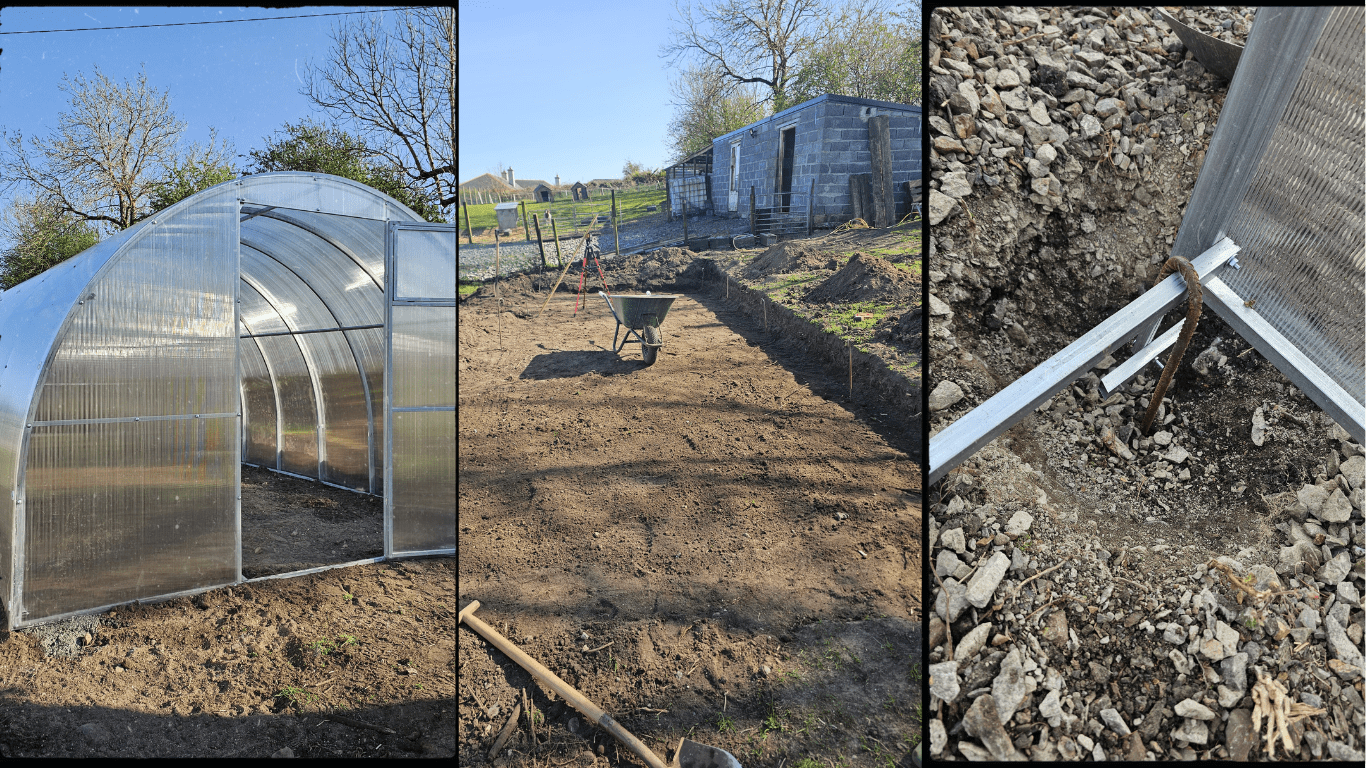
- Mark out the footprint of your greenhouse
- Remove grass, roots, and soft topsoil
- Use a long straight edge + spirit level to check all directions
- Build up low spots with compactable material (hardcore/gravel)
- Compact in layers to stop settling later
A base that is “nearly level” often causes headaches—especially door alignment problems.
4. Anchoring for Irish Weather: Using Rebars
In Ireland, anchoring is a smart idea, especially for gardens exposed to wind.
Why rebars help
Rebars act like strong ground pins that help prevent:
- Lifting in gusts
- Side-to-side movement
- Gradual shifting as the soil softens and dries
Where to anchor
- Corners (most important)
- Midpoints along longer sides
- Near door areas, where the frame gets frequent movement
Tip: Anchor evenly and re-check the frame is square and level before fully tightening everything.
5. Base Option 1 (Most Popular): Levelled Ground Base
A ground base is the most popular choice because it’s practical, quicker to prepare, and usually the most cost-effective—especially when the garden ground is stable.
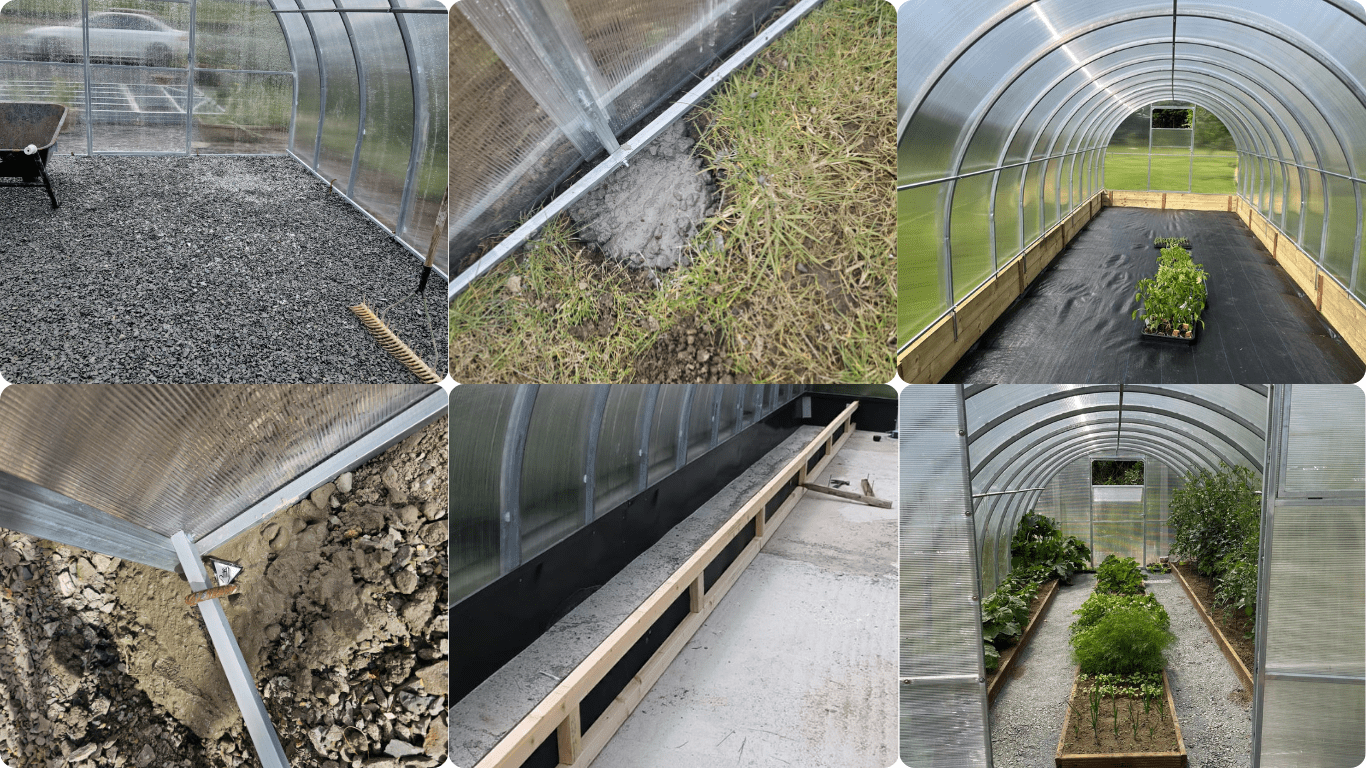
What a good ground base includes
- Carefully levelled area
- Compacted soil and/or a compacted layer of gravel/hardcore
- Optional weed membrane + gravel surface (depending on preference)
- Secure anchoring (rebars or proper anchors)
Pros (Ground Base)
- Most budget-friendly option for many gardens
- Fastest to prepare compared to concrete
- Works well for typical Irish gardens if properly levelled and compacted
- Easy to adjust or improve later (more flexible than concrete)
- Allows natural drainage (if prepared correctly)
Cons (Ground Base)
- Can shift over time if the ground is soft or not compacted well
- More affected by seasonal ground movement (wet winters, drying summers)
- Requires careful attention to drainage, otherwise you can get puddling
- Not as “clean” underfoot as a finished floor
- If not anchored well, wind exposure can become a bigger issue
6. Base Option 2: Concrete Base (Cement Flooring)
A concrete base (cement floor) is ideal if you want maximum stability, a clean surface, and a long-term solution—especially in exposed or very wet areas.
Key point: use high-quality cement
Using high-quality cement and a proper sub-base makes a major difference to strength and longevity. The slab also needs to be perfectly level.
Full Pros (Concrete Base)
- Strongest and most stable base option
- Excellent for windy or exposed gardens
- Keeps the greenhouse very square and rigid
- Easier to keep tidy—good for moving pots, staging, and equipment
- Helps reduce long-term movement or settling issues
- Ideal for year-round greenhouse use
Cons (Concrete Base)
- Highest cost option (materials + labour)
- Takes more time due to preparation and curing
- Permanent—harder to remove or relocate later
- Requires careful planning for drainage and water run-off
- Mistakes are difficult to correct once poured (level and dimensions must be exact)
7. Base Option 3: Timber Greenhouse Base in Ireland
A timber base is a popular alternative when you want something structured without pouring concrete. It can also help when the garden isn’t perfectly level.
What it involves
- A frame made from pressure-treated timber (sleepers are common)
- A level build (still essential)
- Often filled with compacted hardcore/gravel inside the frame
- Good drainage planning to protect timber from sitting in damp conditions
Pros (Timber Base)
- Can be quicker than concrete to build
- Works well if your garden needs a slight raise or a framed footprint
- Can be cost-effective depending on timber choice
- Easier to modify later than concrete
- Looks neat and defined in the garden
Cons (Timber Base)
- Timber can degrade over time if drainage is poor (Ireland’s damp conditions matter)
- Needs quality, pressure-treated materials to last
- Not as rigid and permanent as concrete long-term
- Can move slightly if the ground beneath isn’t well prepared and compacted
- Ongoing maintenance may be needed (checking for rot, re-leveling)
8. Which greenhouse Base Should You Choose?
A simple way to decide:
- Choose a ground base if you want the most popular, budget-friendly option and you can level/compact well.
- Choose a concrete base if you want maximum stability, a clean floor, and long-term performance.
- Choose a timber base if you want a structured footprint without concrete and you’re willing to plan drainage carefully.
In most Irish gardens, a properly levelled ground base with secure anchoring (rebars) is the most common and practical solution.
9. Final Checks Before Greenhouse Assembly
Before you start building the greenhouse:
- Confirm the base is level
- Check corners are square (measure diagonals)
- Make sure the ground is well compacted
- Confirm drainage around the perimeter
- Don’t fully tighten bolts until everything is aligned correctly
In conclusion, a sturdy greenhouse base is essential for stability, performance, and long-term use in Irish conditions. Whether you choose a ground base (most popular), a concrete cement floor, or a timber base, the key is always the same: level ground, strong anchoring, and good drainage.
At BMP Garden, our polycarbonate greenhouses are designed for Irish weather—and pairing them with the right base helps you get the best results season after season.
📦 Delivery available | 🚚 Collection possible
Read more about BMPgraden here
Follow us on our social Media- Facebook & Instagram